
We must think anew
In environmental policy, we can't just go back to the way things were

US environmental policy needs its own FEMA. The wreckage wrought by the Trump administration is staggering. The shards of broken policy windows will afflict all of us eventually. A hurricane has swept through environmental laws and programs that we took for granted for a long time.
What we can't do, however, is simply undo the rollbacks that the Trump administration has punched through. We've been through this cycle before. One president rolls things back and the next president rolls them forward and the next president continues the cycle. It’s not getting us anywhere.
This time around, there needs to be a reckoning with the fact that our main environmental laws have been stuck in a mud bath for over 20 years. They're the product of thinking and systems that go back to the early 1970s, over 50 years ago. And they’ve become a never-ending battle in Congress and the courts.
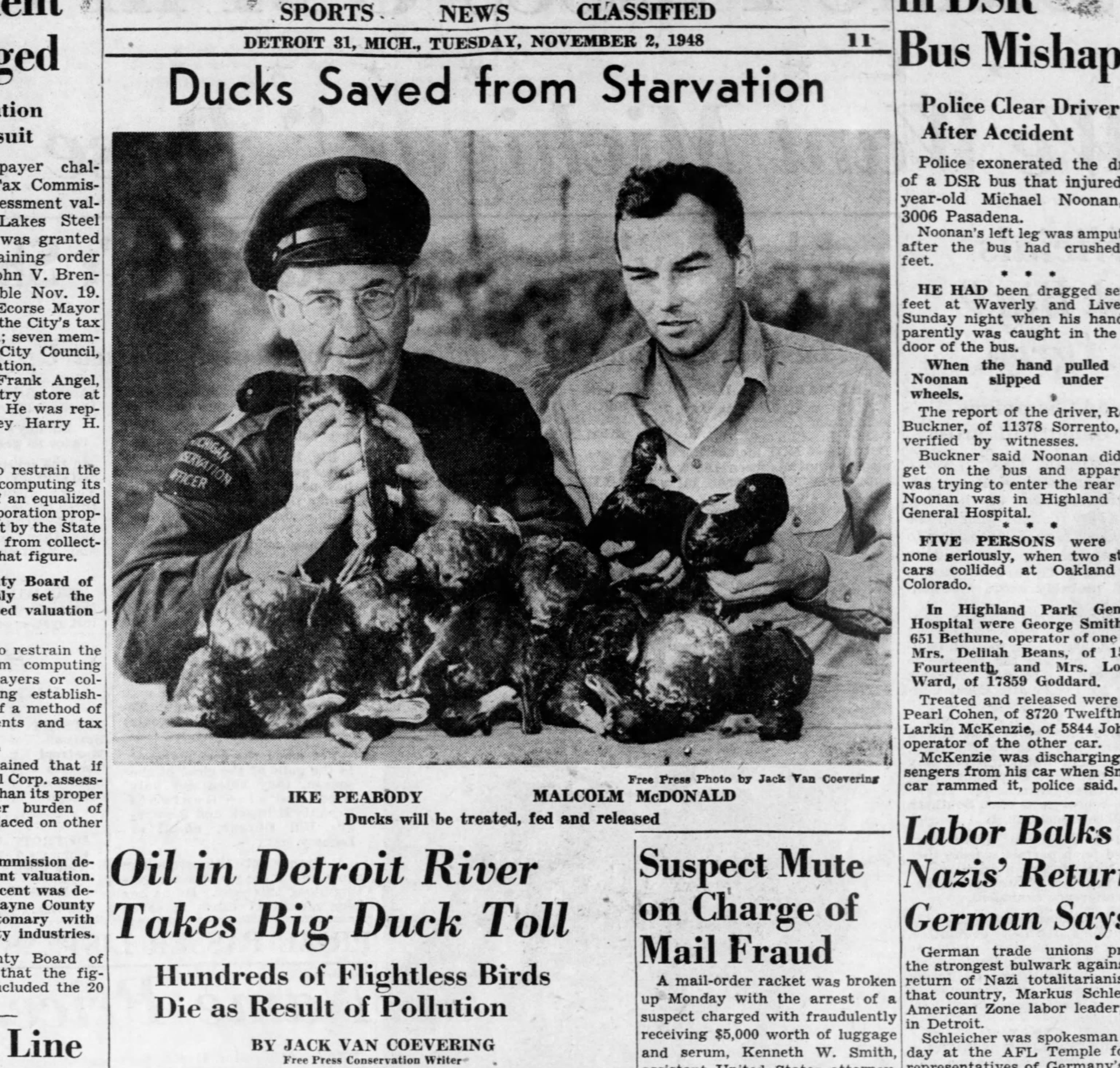
We rarely have massive fish and wildlife kills now, but that’s not good enough. Almost all Americans carry detectable levels of PFAS chemicals in our blood.
Meanwhile, the job of restoring the environment has largely stalled. Approximately 50% of Michigan’s rivers are polluted with E. coli above health standards. Thousands of private wells across the state are contaminated with nitrates near or above health standards. Nationally, EPA and the states have determined almost 70,000 water bodies nationwide do not meet water quality standards. The goal of the 1972 Clean Water Act was to make virtually all water bodies in the country swimmable and fishable by 1985.
This all begs for a change in how we think about the role of government and the private sector in protecting the environment.
New thinking is out there. For example, the Wisconsin Water Agenda, whose development was steered by the brilliant environmental veteran Bill Davis. The premise of the Agenda is that Wisconsin’s “water challenges will continue unless we can find a better way to safeguard our water. We must create a better system.” The agenda spells out 12 elements that are critical to a new clean water approach. States like Wisconsin may make some hopeful changes, but they’re unlikely at the federal level.
A principal reason that Congress hasn’t modernized environmental laws is lack of trust. The environmental community doesn’t believe polluters will enter into good faith negotiations on a new approach — rather, they’ll support repeal or weakening without any intent to work for a new way.
But let’s pretend that’s not an obstacle. Here’s one batch of elements I would suggest for a new approach to achieving clean water.
1, Make it comprehensible to and accessible by the layperson. Encourage public participation in decisionmaking. The current maze of laws, rules, guidance, permits, and technical language couldn’t be better designed to baffle and box out the public.
2, Make “prevention first” the cornerstone.
3. Face the fact that industrial agriculture is a force that is fouling waters and threatening health and should not be coddled. It should be treated as an industry, not a community of individual yeoman farmers.
3. Permits should be regarded as a responsibility, not an entitlement. Permits are special exceptions to the mandate not to pollute.
4. Reduce to the maximum extent possible the intricate and sometimes overdone detailed requirements in permits, set a performance standard and enable the permit holder to figure out how to meet the standard.
5.Target any incentives at small businesses and operators and only for a transition period.
6.Require a demonstration of safety for all chemicals proposed for introduction into commerce.
7.Enforce the law at least as strictly against major corporate violators as small businesses and individuals. No exceptions.
8.All of us must pay taxes necessary to fund sewage treatment and drinking water treatment infrastructure.
Your turn.
all these things can be done but they're not going to be done inching through compromises here and compromises we need to come together around a new approach that includes incentives, mandates, enforcement, and continuity. There needs to be a way of keeping environmental policy from being subjected to a hurricane every four to eight years.
One more thing (you’ve really got me thinking about this, Dave!): The frustrating back-and-forth policy gyrations you’ve described in connection with changes in presidential administrations are a direct result of the failure of Congress to do their job. Congress has been largely dysfunctional for the last 40 years, and when Congress fails to effectively exercise its power, it is inevitable that power will be taken up by the executive and judicial branches of our government.
The reasons for the decline of Congressional effectiveness are many, but among the most important are a system of partisan primaries that tend to exaggerate political extremes and the pressures for re-election that motivate incumbents to emphasize their differences, their posture as “fighters” and their individual positions rather than acknowledgement that Congress is a large body that only works through collective action and therefore calls for compromise in order to be effective in its role in our government.
Great suggestions, Dave. I would add this: as we need to take a collective look at environmental policy as a nation, the environmental movement needs to take a serious look at itself and address the question of how it came to become so attached to divisive partisan politics. Environmental issues are decidedly political in the sense of being issues of public concern, but weren’t always political in the partisan sense. What happened? Conservation is, in name and in essence, a conservative endeavor. Republican administrations advanced some of the environmental laws and programs we value today, yet environmentalism is decidedly identified with the Democratic party.
I believe that to some extent we allowed the movement to be dragged to the political left against our principles and through associations over the years with issues and practices that had little or nothing to do with environmental policy. We failed to stress the genuinely conservative side of environmentalism and among other things withdrew from the traditional conservation movement that was associated with hunting and fishing. That schism did not serve us well in the past and it does not serve us well today as the partisan pendulum swings to and fro. The gaps that have grown over the years will not be easy to bridge, but if we are to bring about the sort of change that you’re wisely advocating, it will be necessary to bridge them.